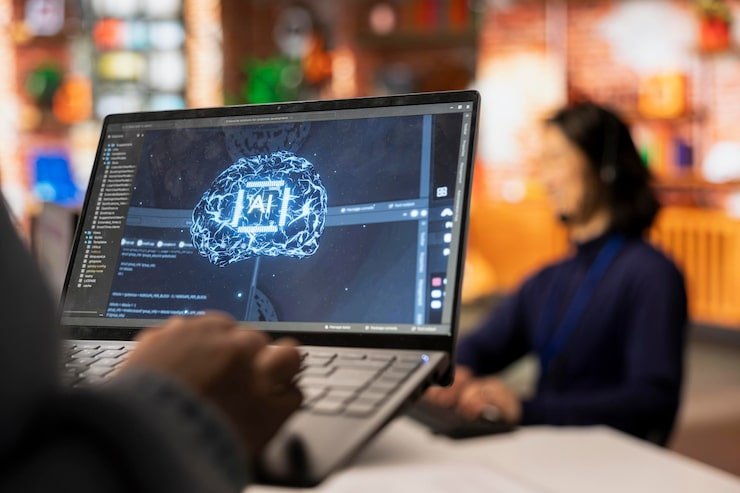
Imagine a city where every streetlight, door, appliance, and vehicle has its own tiny librarian. Not a robot librarian, but a quiet, invisible mind that can read, interpret, decide, and act faster than any call to a distant database. This is the spirit of intelligence at the edge. Instead of sending information across long digital highways to massive cloud servers, devices learn to think exactly where they are. They observe their surroundings, understand patterns in real time, and respond with near-instant precision. This shift brings technology closer to the rhythms of everyday life.
The Shift from Central Brain to Neighbourhood Brains
In traditional computing, the cloud has been the grand library, storing knowledge and making decisions. But depending on one big city library for every question is slow, especially when a device must act immediately. Edge AI distributes smaller, specialised minds across local devices. These devices become the neighbourhood librarians, trained to understand the environment they are in, rather than sending every question to the central library.
This transformation is not just technical. It changes how industries operate. For example, manufacturing equipment can detect slight vibrations that indicate machine stress. Instead of waiting for remote analysis, the system reacts instantly, preventing downtime. The ability to detect, interpret, and act within milliseconds is what makes this shift powerful. Learners exploring how this distributed thinking works often find stepping into an ai course in bangalore helpful, as it provides the structural understanding behind real-time intelligent decision systems.
Why Proximity Matters
When intelligence lives close to the source of data, decision-making becomes faster. Consider a self-driving car navigating busy traffic. Sending data to a cloud server and waiting for a response could cause delays that are too costly. Instead, sensors, cameras, and processors inside the vehicle evaluate traffic lights, pedestrians, speed, and distance at lightning speed. The car does not need to ask permission to brake. It just knows.
Similarly, wearable health devices can monitor heart rhythms continuously and alert users before something unusual becomes dangerous. The device becomes a personal guardian because it does the thinking locally. This closeness to data turns technology from an assistant into a companion that acts in real time.
Edge Devices as Decision-Makers
Edge AI is not simply a relocation of computing tasks. It equips devices with judgment. Small processors within cameras, appliances, and sensors now host compact but powerful models that understand patterns. This changes their roles from passive collectors of information to active decision-makers.
Retail stores use smart shelves that detect when products run low and signal restocking automatically. Cities deploy traffic cameras that manage signal patterns based on vehicle movement rather than fixed timers. Farms adopt soil sensors that adjust irrigation levels depending on moisture and sunlight. These are not futuristic concepts. They are implementations happening right now, reshaping how efficiency is achieved.
Challenges and Boundaries
However, distributing intelligence is not without complexity. Devices must be secure, especially when handling sensitive information. Processing power is limited, so the models must be optimised. Coordination between cloud and edge must remain balanced. The goal is not to replace cloud computing, but to create harmony between local quick-thinking and centralised deep analysis.
Enterprises, governments, and developers are working to ensure trust, reliability, and performance. As more devices gain independent decision-making ability, standards for privacy and consistency become essential. The future depends on how seamlessly intelligence can be embedded without overwhelming infrastructure or compromising safety.
Conclusion
Bringing intelligence closer to devices reshapes the way technology interacts with daily life. Instead of machines waiting for distant commands, they act immediately, thoughtfully, and with contextual awareness. From healthcare and transport to homes and factories, edge intelligence is the quiet revolution that makes technology feel more present and responsive.
Professionals aiming to play a role in designing or managing such systems often build foundational learning through structured programs, and many explore an ai course in bangalore to understand how distributed intelligence frameworks are created and deployed. The evolution of intelligence at the edge marks a shift from distant thinking to thinking within reach, where decisions happen in real time and technology becomes a seamless part of human experience.